REIVAX’s expertise in integrating technologies that make renewable power plants smarter, more flexible and more efficient.
The energy transition requires more than simply generating renewable energy. The real challenge lies in intelligently integrating different technologies to ensure reliability, operational flexibility and maximum asset profitability.
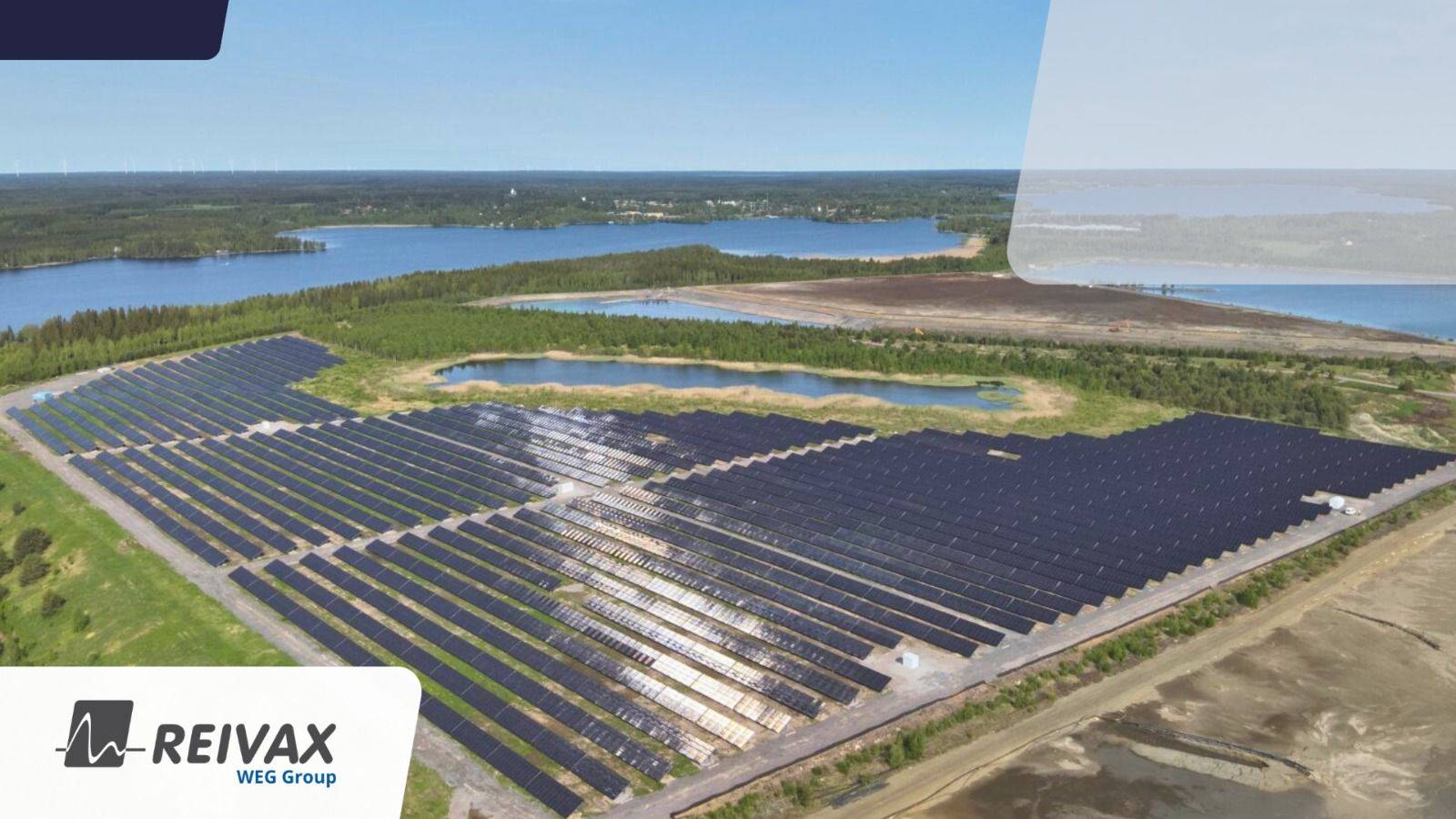
In this context, REIVAX has been strengthening its expertise in hybrid power plant solutions. One example is its participation in the commissioning of the EMS (Energy Management System) for the Callio Hybrid Power Plant, located in Pyhäjärvi, Finland—one of the country’s first projects to integrate solar power generation with Battery Energy Storage Systems (BESS).
Callio Hybrid Power Plant
Located at one of the deepest mines in Europe, the project represents an important milestone in the evolution of Finland’s power sector, becoming one of the country’s first large-scale hybrid power plants to combine photovoltaic generation with Battery Energy Storage Systems (BESS).
Originally consisting of a 10 MW photovoltaic power plant, the facility sought to expand its participation in the ancillary services market through the installation of a battery energy storage system.
How Does the Finnish Electricity Market Work?
Energy Market + Ancillary Services – Nord Pool and Fingrid
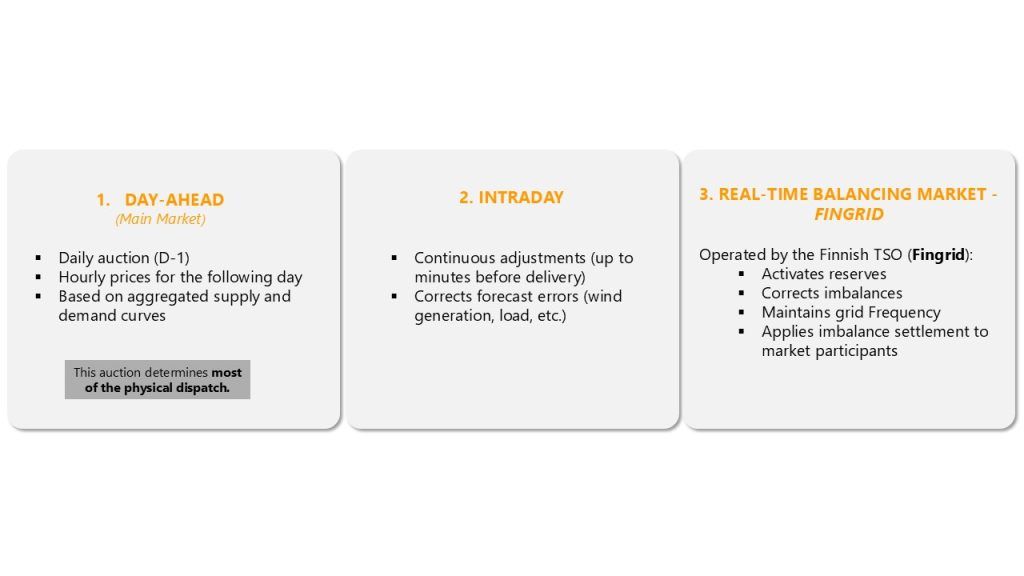
Finland is part of Nord Pool, the power exchange responsible for electricity pricing and day-ahead auctions across the Nordic and Baltic countries. In addition to the Day-Ahead and Intraday markets, real-time balancing is performed by Fingrid, Finland’s transmission system operator (TSO), which manages reserve markets and ancillary services.
Ancillary Services
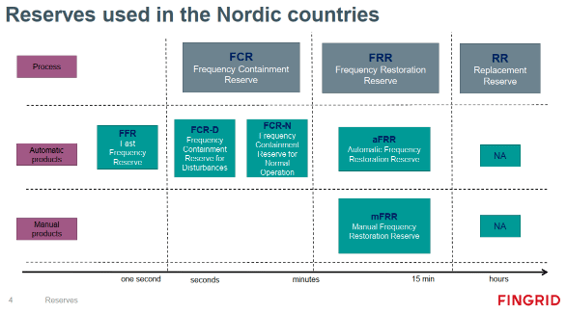
Fingrid also provides real-time system flexibility through reserve capacity (ancillary services) to maintain grid frequency and stability. These services include FFR, FCR-D, FCR-N, aFRR, and mFRR, helping ensure secure system operation while creating new revenue opportunities and increasing operational flexibility—an approach that addresses many of the challenges currently faced by power systems such as Brazil’s.
Participation in ancillary service markets requires power plants to reserve part of their available capacity. The main services are:
- Fast Frequency Response (FFR) — The fastest frequency control service, designed to respond to sudden frequency drops. Conventional synchronous generators have limitations in providing this service due to their inherent mechanical inertia. Inverter-Based Resources (IBRs), however, can respond much faster because they are not constrained by mechanical inertia. Once activated, FFR must be sustained for a specified period, allowing FCR-D providers sufficient time to contribute to restoring system frequency.
- FCR-D (Frequency Containment Reserve – Disturbance) — The second line of defense against major frequency disturbances. It provides support during both overfrequency and underfrequency events and has less stringent response-time requirements than FFR.
- FCR-N (Frequency Containment Reserve – Normal) — This reserve provides primary frequency control during normal system operation. Whenever small imbalances arise between generation and demand, FCR-N providers automatically adjust their output to restore frequency equilibrium.
- aFRR (Automatic Frequency Restoration Reserve) — This reserve restores the system frequency to its nominal value after the initial stabilization phase. It is typically deployed by secondary frequency control systems, such as Automatic Generation Control (AGC). Although it has the slowest response among these services, it must still operate automatically without local operator intervention.
REIVAX EMS
The project, executed by WEG under an EPC contract for Solarigo, included:
- REIVAX EMS;
- Two RISEN lithium-ion battery containers with a total storage capacity of 8 MWh;
- A 4.6 MW SMA Power Conversion System (PCS).
Beyond integrating the equipment, the main challenge was to coordinate all these assets safely, efficiently, and in full compliance with the stringent operational requirements established by Fingrid (TSO) and Elenia (DSO).
In Finland, power plants are classified into four categories: A, B, C, and D. The Callio Hybrid Power Plant is classified as a Type B facility, with a capacity below 10 MW.
Among the main EMS control functions are:
- a) Point of Interconnection (POI) – Active power export/import limitation, as well as voltage, reactive power, and power factor control.
- b) BESS Control – Execution of charging and discharging setpoints, together with battery management functions designed to ensure safe operating conditions and maximize battery lifetime.
- c) PV Plant Control – Active power limitation for the photovoltaic plant.
- d) Ancillary Services Market – Support for executing reserve market dispatch commands for frequency support (FCR-N, among others).
VPP Integration: Intelligence Beyond the Power Plant
The purpose of the REIVAX controller extends far beyond fulfilling local control objectives, as expected from a secondary controller. It operates as part of a broader control ecosystem, integrating with external partners and supporting the execution of commands issued by Virtual Power Plants (VPPs), which perform tertiary-level control.
In simple terms, a VPP enables multiple distributed assets to operate as if they were a single large power plant.
By aggregating smaller generating assets, VPPs provide operational flexibility while enabling joint participation in electricity and ancillary service markets. This coordinated operation allows assets to participate simultaneously in multiple markets, enabling revenue stacking and significantly increasing project profitability.
Revenue Stacking: The Catalyst for Unlocking BESS
The transition toward a more decentralized power system, together with the development of structured ancillary service markets, will be the key catalyst for unlocking the full potential of Battery Energy Storage Systems (BESS) through revenue stacking.
Individually, only a limited number of BESS applications provide sufficient financial returns to justify the investment. Through revenue stacking, however, a single asset can simultaneously generate value across multiple applications and market opportunities.
This ability to monetize multiple revenue streams throughout the project’s lifetime significantly improves economic viability, reduces investment risk, and transforms BESS from a single-purpose asset into a multifunctional energy platform.
The result is the economic viability of projects that would otherwise be marginal, accelerating the adoption of battery energy storage as a fundamental resource for enhancing the flexibility, reliability, and resilience of Brazil’s power system.
A Project That Anticipates Global Energy Trends
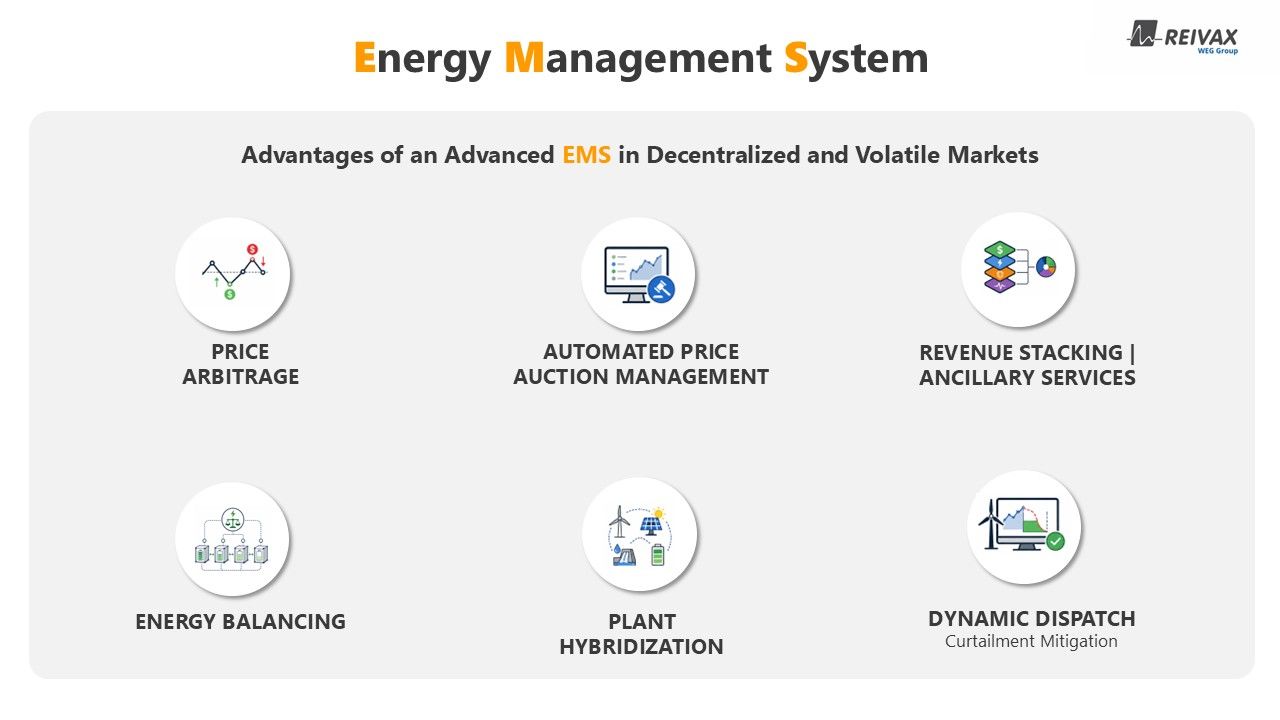
As power systems continue to integrate higher shares of renewable generation, the need for solutions that provide flexibility, grid stability, and fast response becomes increasingly critical.
Projects such as Callio demonstrate how advanced Energy Management Systems (EMS) are becoming central to the operation of hybrid power plants, enabling renewable assets to be managed more intelligently while maximizing their operational and economic value.
REIVAX
For REIVAX, participating in this project reinforces our international presence and our ability to deliver comprehensive control and automation solutions for hybrid generation and energy storage systems, fully compliant with the industry’s most demanding technical and regulatory requirements.
We remain committed to supporting the development of a more flexible, efficient, and resilient power system, helping accelerate the global energy transition.