


Static Excitation systems for 826MVA project completed ahead of schedule by Reivax
Award Criteria and Scope Of Work
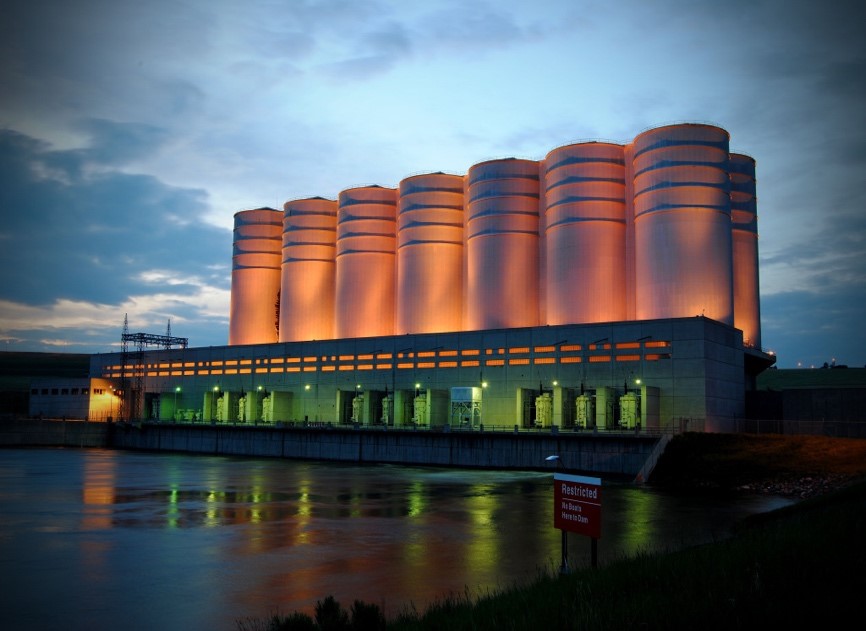
Reivax North America (Reivax) is pleased to have recently completed a turnkey project with the US Army Corps of Engineers in South Dakota. The hydro plant has the 3rd largest reservoir in the US.
All seven (7) excitation systems were due for a replacement. Reivax was awarded the full project scope in 2017, including equipment supply, design, installation, project management, site supervision, commissioning and completed the project before the scheduled completion date to the client’s satisfaction.
The evaluation factors for the proposal were Experience, Past Performance, Design, Safety and Price. Reivax was awarded the contract in competition with other excitation OEMs, such as, ABB and Basler Electric.
The project scope included:
- Supply and installation of new excitation systems and transformers
- Supply and install of cable conduit for AC and DC connections
- Supply and install of new generator CTs
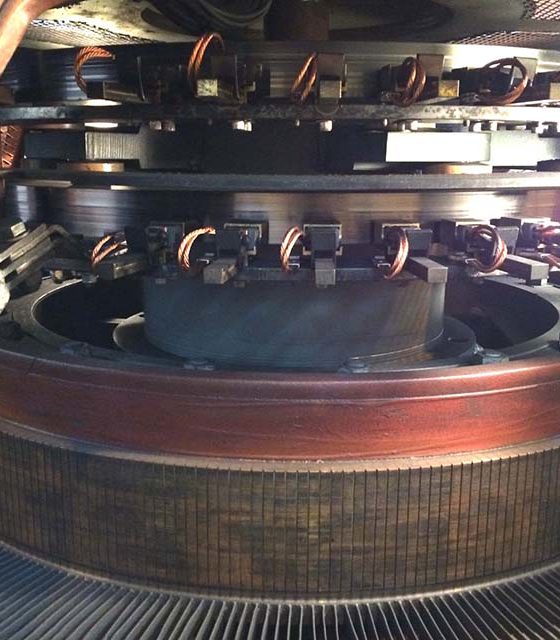
- Collector ring inspection, refurbishment, and brush and holder replacement
- All engineering, commissioning and model validation testing (MOD-026, PRC-019)
- Control board modifications, IRIG-B extension, and fiber optic SCADA interface to the exciter
All work was done according to the customer’s safety program EM 385-1-1 and Activity Hazard Analysis (AHAs) were developed for each feature of work.
Excitation Line-up and Controls
This powerhouse has seven (7) 118MVA generators, for a total generation capacity of 826MVA. Reivax provided a fully redundant 1600ADC frame size for each unit.
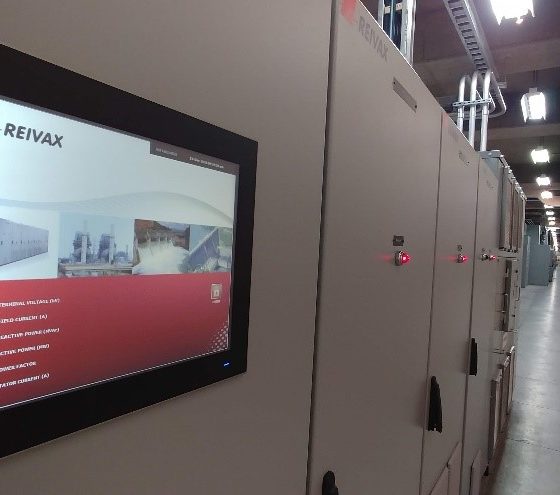
An IRIG-B extension, and a fiber-optic network was provided and installed in order to have Ethernet communication with the control room and to have a satellite clock stamp for the Sequence Of Events (SOE) etc. Reivax installed a TTL to RS485 converter in the control room to allow the IREG-B signal to extend about 650 feet to the last excitation line-up. Due to the long distance, Reivax also installed a fiber-optic network to communicate between the exciters and plant SCADA system.
Reactive Current Compensation
Each two (2) generating units were tied to the same step-up transformer and the customer wanted to compensate for both the VAR losses in the step-up transformer while at the same time also ensuring a stable VAR sharing between parallel units. In order to meet this requirement, a Reactive Differential Compensation (RDC) and a Line Drop Compensation (LDC) feature was implemented and proven successful.
Installation Challenges
The location where the excitation systems needed to be installed had a limited depth. Less than 4 feet was available to pass equipment in front of the cabinets due to an existing switchgear line-up. To solve this problem, Reivax had the PPT designed with a knock-down enclosure, allowing our on-site personnel to disassemble the PPT cabinet from its core & coil, transport it to the final location within the powerhouse, and reassemble. This proactive design avoided many potential installation issues.
Collector Ring Work
The collector rings for all the units were inspected and as the grooving was quite severe, the collector rings had to be removed for off-site machining in lieu of polishing in place. The government removed the collector ring housing in order to gain access for the inspection and removal. New brush holders and brushes were installed once the re-furbished rings were mounted back on the shaft.
Customer Benefits
The customer was facing several issues with their old exciters. Namely, the components were becoming obsolete, there was a lack of technical OEM support and the equipment reliability of the systems was becoming poor.
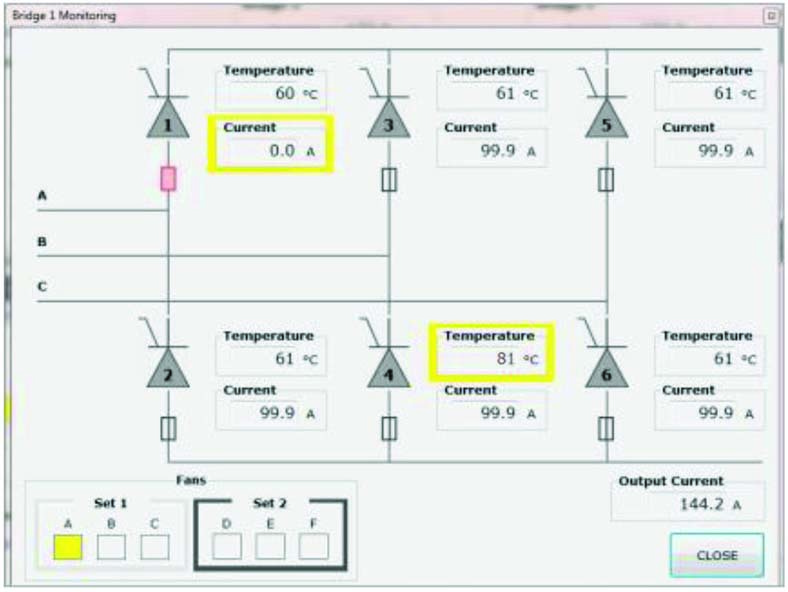
Reivax addressed these issues by providing a 1,600ADC frame size for the 1,240ADC rated field current. The additional “spare” capacity allowed thyristors, breaker and bus bars etc. to have a lower operating temperature compared to if the design was rated for a lower current. Lower operating temperature of components results in a more reliable design and has less wear and tear over time, which extends the longevity of the system. The RTX Power redundancy concept is unique as the controller is not bridge dependant. Hence, either of the redundant controllers can operated with either of the two thyristor bridges. The Reivax RTX Power HMI has several diagnostic features that aid in the exciter inspection. See below the HMI screen demonstrating a bridge monitoring screen with fan, temperature, fuse, and conduction monitoring. Finally, the offline draw-out capabilities of the thyristor bridge and AC breaker allowed for easier inspection and maintenance for the powerhouse staff.
Why choose Reivax North America?
Leave the full turn-key responsibility to Reivax like US Army Corp Of Engineers did for the Oahe static excitation systems or choose to contract just the equipment and perform the removal/installation work separately. Either way, Reivax RTX Power product will provide years of reliable operation. Our 24 /7 service line and easy to use diagnostics along with our two (2) spare part locations will ensure that any issue is quickly resolved and the unit is returned to operation.

